
Most travelers believe they know how car rentals work.
You search, compare prices, pick the cheapest deal, and book.
Simple… right?
Unfortunately, this is exactly where many renters get caught in one of the most common — and least noticed — traps in the car rental industry.
And no, it’s not what most people expect.
The Illusion of the “Cheap Rental Price”
The biggest misconception in car rentals starts with the advertised price.
That attractive daily rate you see online often represents only the base cost of the vehicle — not the actual amount you will pay.
By the time you reach checkout or the rental counter, the price frequently increases due to:
-
Mandatory insurance upgrades
-
Excess reduction fees
-
Coverage add-ons
-
Security deposit requirements
What looked like a bargain suddenly becomes a much larger expense.
Where the Real Cost Hides
Here’s the part most travelers don’t realize:
For many rental providers, the vehicle itself is not the primary profit source.
Insurance products, protection packages, and deposit structures are.
This means a company can advertise very low rental rates while recovering revenue through:
? Expensive protection plans
? Confusing coverage terminology
? Fear-based upselling
? Large credit card holds
The customer focuses on the car price.
The provider profits from the extras.
Why Most Renters Don’t Question It
Psychology plays a major role.
After planning flights, hotels, and itineraries, renters typically reach the car rental stage already mentally committed.
When confronted with warnings like:
“Without this coverage, you’re fully liable.”
“This protection is highly recommended.”
“Most customers choose full insurance.”
Many travelers agree simply to avoid perceived risk.
Not because they fully understand the cost.
The Deposit Shock
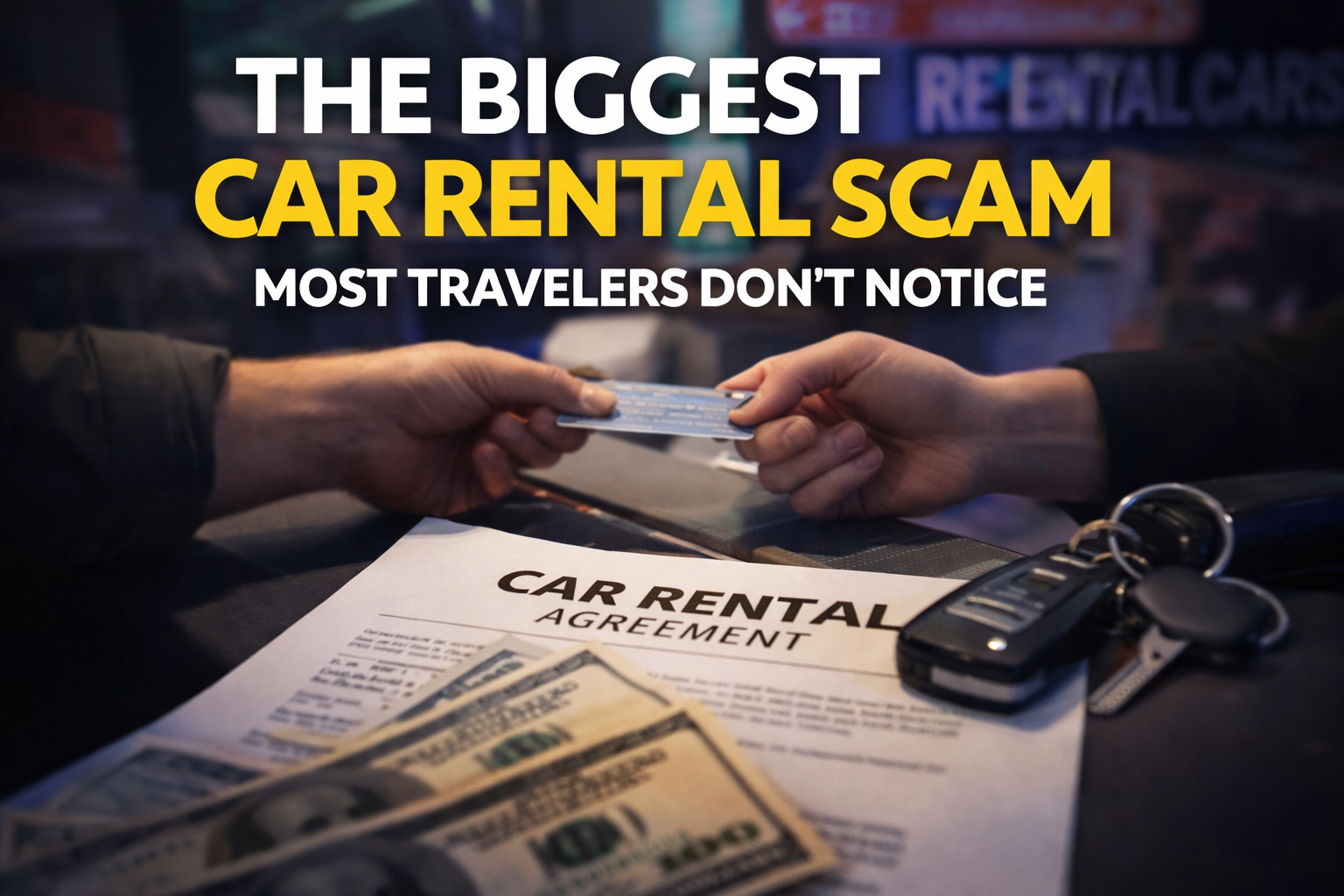
Another overlooked surprise is the deposit or credit card hold.
Even when renters purchase high-tier insurance, they may still face:
-
Hundreds blocked on their card
-
Reduced available funds during travel
-
Delayed release timelines
For tourists, this can be more stressful than the rental itself.
Yet it’s rarely highlighted during price comparison.
So What Is the “Scam”?
It’s not illegal.
It’s structural.
The industry often markets the smallest number (base price) while the true rental cost depends on conditions many customers only discover late in the process.
The result?
Renters unintentionally pay far more than expected.
How Smart Travelers Avoid This Trap
Before booking any rental, always check:
? Total cost — not just daily rate
? Insurance requirements
? Deposit amount
? What is optional vs mandatory
? Liability structure
Transparency is the single best protection for renters.